
Introduction: Fire Safety as a Core Business Responsibility
Fire incidents can bring operations to a complete stop within minutes. Beyond physical damage, fires can cause injuries, legal action, reputational loss, and long-term financial impact. This is why a structured Fire Risk Assessment is considered a core responsibility for organizations of all sizes.
A professional approach to fire risk assessment helps decision-makers understand where vulnerabilities exist and how to address them before an emergency occurs. Fire safety is not accidental—it is planned.
What Makes a Fire Risk Assessment “Professional”?
A professional fire risk assessment goes beyond basic checklists.
Key Professional Characteristics
- Site-specific analysis
- Consideration of human behavior
- Clear prioritization of risks
- Practical control measures
- Ongoing review and improvement
It reflects how the premises are actually used, not how they are expected to be used.
See also: Benefits of Home Automation
Fire Risk Assessment and Business Continuity
Fire safety and business continuity are closely connected.
How Fire Risk Assessment Supports Continuity
- Prevents operational downtime
- Protects critical assets
- Reduces recovery time after incidents
- Supports insurance and recovery planning
Organizations that plan for fire risks recover faster and more effectively.
Identifying Fire Hazards Across Business Operations
Fire hazards can exist in all operational areas.
Operational Hazard Areas
- Offices and workstations
- Storage and warehouse zones
- Plant rooms and server rooms
- Kitchens and break areas
A fire risk assessment evaluates each area individually.
Electrical Fire Risk Management
Electrical faults are a leading cause of workplace fires.
Electrical Risk Controls
- Regular testing and inspections
- Safe use of extension leads
- Equipment maintenance programs
- Clear reporting of faults
Electrical safety forms a major part of fire risk assessment.
Fire Risks Linked to Human Behavior
Human actions significantly influence fire safety.
Behavioral Risk Factors
- Ignoring safety procedures
- Improper equipment use
- Poor housekeeping
- Unauthorized modifications
Fire risk assessment considers both intentional and unintentional behaviors.
Protecting High-Risk and Critical Areas
Some areas require higher levels of protection.
Examples
- Data centers
- Chemical storage rooms
- Manufacturing zones
- Fuel storage areas
Enhanced detection, suppression, and access controls are often required.
Fire Detection and Suppression Strategy
Detection and suppression must match risk levels.
Assessment Focus
- Detection speed
- Alarm coverage
- Automatic suppression systems
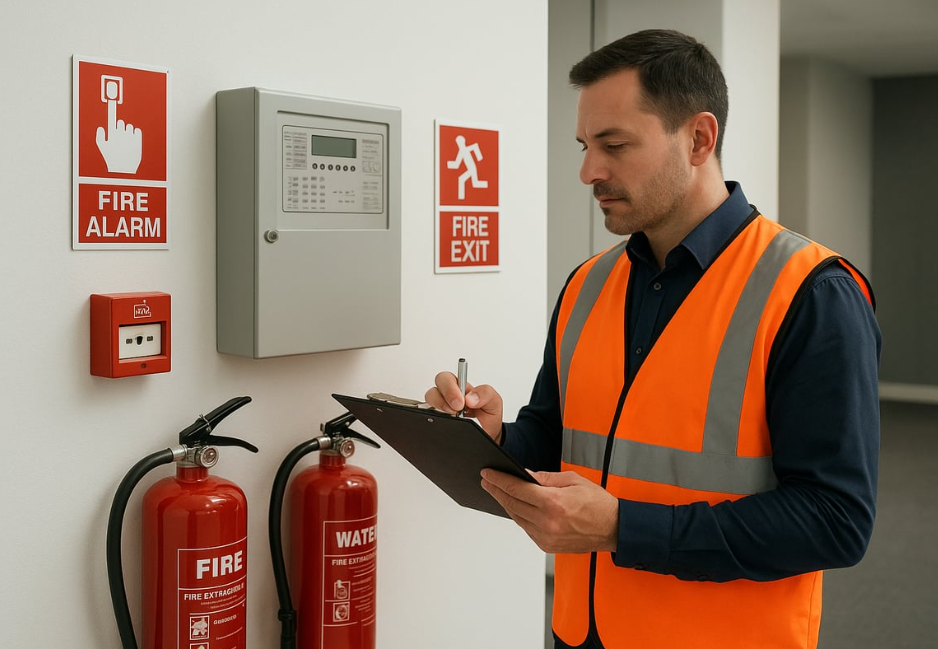
- Manual firefighting equipment
Fire risk assessment ensures systems are suitable and effective.
Emergency Evacuation and Life Safety Planning
Life safety is the highest priority.
Evacuation Planning Elements
- Clear escape routes
- Exit signage and lighting
- Safe assembly points
- Procedures for vulnerable persons
Fire risk assessment validates that evacuation can occur safely and quickly.
Roles, Responsibilities, and Leadership
Strong leadership improves fire safety outcomes.
Key Roles
- Responsible person
- Fire safety manager
- Fire wardens
- Employees and contractors
Clear accountability reduces confusion during emergencies.
Fire Safety Training and Competence
Competent people respond better under pressure.
Training Must Include
- Fire prevention awareness
- Alarm response actions
- Evacuation procedures
- Use of firefighting equipment
Training effectiveness should be reviewed regularly.
Maintenance and Inspection Programs
Fire safety systems require ongoing care.
Maintenance Activities
- Alarm testing
- Extinguisher servicing
- Emergency lighting checks
- Exit route inspections
Fire risk assessment ensures maintenance schedules are followed.
Recording, Reporting, and Auditing
Documentation supports accountability.
Essential Records
- Fire risk assessment reports
- Action plans
- Training records
- Maintenance logs
Audits help identify gaps and improvement opportunities.
Continuous Improvement Through Review
Fire risk assessment is never static.
Review Triggers
- Changes in layout or use
- New equipment or processes
- Staff changes
- Fire incidents or near misses
Regular review keeps safety measures relevant and effective.
FAQs About Fire Risk Assessment
1. What qualifications are needed to carry out a fire risk assessment?
Competence, training, and experience relevant to the premises.
2. Does fire risk assessment apply to remote or hybrid workplaces?
Yes, shared and managed spaces must still be assessed.
3. Can fire risk assessment improve safety culture?
Yes, it increases awareness and accountability.
4. How detailed should action plans be?
Clear, prioritized, and time-bound.
5. Are temporary buildings included?
Yes, temporary structures often have higher fire risk.
6. Who checks compliance with fire risk assessment?
Fire authorities, regulators, and insurers.
Conclusion
A professional Fire Risk Assessment is a powerful tool for protecting people, property, and business continuity. By addressing hazards, behaviors, systems, and responsibilities, organizations can reduce fire risks to manageable levels.
Fire safety is not achieved by chance—it is achieved through planning, leadership, and continuous improvement supported by a strong fire risk assessment process.


 By
By