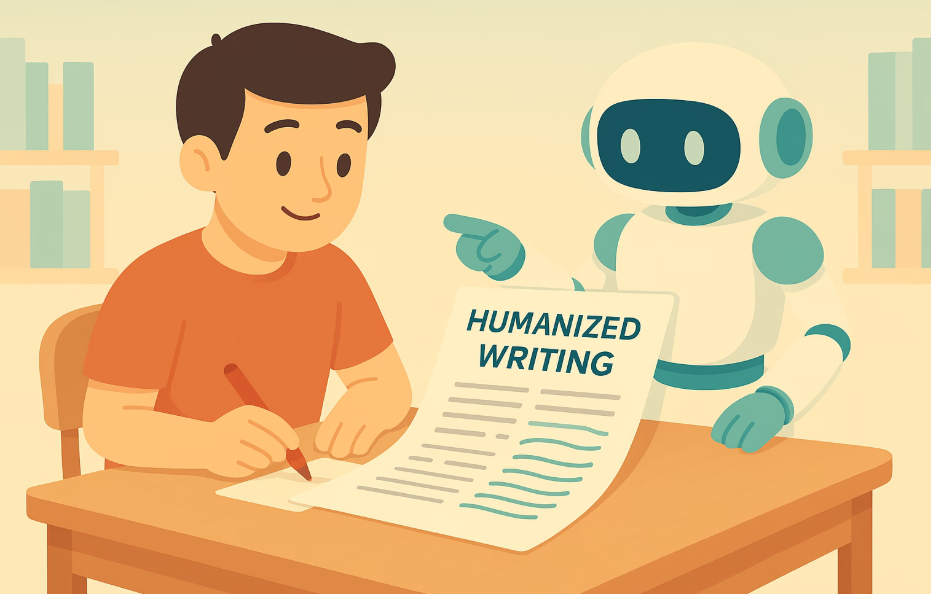

Creating content that feels natural, engaging, and genuinely human is something every writer and marketer strives for. But with AI tools everywhere, it’s easy for text to start sounding robotic or repetitive. That’s where Humanized AI comes into play. It’s designed to keep the efficiency of AI while making content feel like a real person wrote it. Curious how it works? Let’s dive in.
What Is Humanized AI?
At its center, Humanized AI is all about mixing technology with a human touch. Think of it like having an assistant who can write fast, however still knows tone, waft, and context. Instead of churning out content material that’s stiff and formulaic, Humanized AI focuses on styles that make writing feel natural. This method sentences that fluctuate in length, questions that engage the reader, and expressions that mimic how people without a doubt talk.
Why does this count? Readers these days are smart. They can spot content material that’s in simple terms AI-generated a mile away. If your writing doesn’t feel authentic, humans scroll past, irrespective of how nicely-optimized it is for search engines like google and yahoo.
Why Humanized AI Makes Your Content Better
You might wonder if you really need Humanized AI when traditional AI tools are already so advanced. The difference is subtle but powerful. Traditional AI can sometimes overuse certain phrases, sound too formal, or produce content that lacks personality. Humanized AI, on the other hand, understands context and can inject variety and emotion into the writing.
This matters for SEO too. Google doesn’t just look for keywords anymore; it wants content that actually satisfies the reader. If someone clicks on your article and leaves within a few seconds, that signals poor engagement. Humanized AI helps prevent this by producing content that keeps people reading.
Tips for Using Humanized AI Effectively
Even though Humanized AI can make writing feel natural, it’s not a magic button. You still need to guide it to produce the best results. Here are a few tips:
- Start with a clear outline
Know the key points you want to cover. Humanized AI works best when it has direction rather than a vague topic. - Keep your tone in mind
Decide whether your article should be casual, professional, or somewhere in between. The AI can adjust its style, but you need to set the boundaries. - Mix short and long sentences
This keeps the flow lively. Long sentences can explain complex ideas, while short ones add punch. - Ask questions to engage readers
Questions make your audience pause and think. They also mimic natural conversation, which is exactly what Humanized AI excels at. - Review and tweak
Even the best Humanized AI output needs a human touch. Read through the content and tweak sentences to make them feel even more authentic.
Real-Life Examples of Humanized AI in Action
Imagine you’re writing a blog about travel tips. A standard AI might write:
“Traveling is fun. You should pack light. Bring a map.”
Simple, correct, but flat. Humanized AI can take that same idea and turn it into:
“Ever notice how lugging around a heavy suitcase can ruin your trip before it even starts? Packing light isn’t just smart, it’s essential. And yes, even in the age of Google Maps, having a paper map tucked in your bag feels oddly comforting.”
See the difference? One is mechanical, the other feels like someone is speaking directly to you.
See also: AI Humanized Tools That Every Marketer Should Try
Why This Matters for Businesses and Bloggers
For businesses, authentic content builds trust. Readers are more likely to stay on your site, share your posts, and even buy your products if your writing resonates. Bloggers benefit in the same way—engaging, human-like content helps grow an audience and improve search rankings without sacrificing readability.
Humanized AI isn’t just about avoiding robotic text. It’s about creating an experience. When your content feels alive, people connect with it, which naturally boosts SEO and user engagement.
Getting Started with Humanized AI
Starting is easier than you think. Many platforms now offer AI tools with humanization features built in. You simply provide a topic, give it some instructions on tone and style, and the AI produces a draft. From there, you review, tweak, and refine. Think of it as a collaboration—you’re still the author, but with a helpful assistant speeding up the process.
The key is to experiment. Play around with sentence structures, tone, and narrative style. You’ll quickly see how much more engaging your content becomes when you combine AI efficiency with a human touch.
Final Thoughts
The intention of writing has continually been to communicate ideas successfully and connect with readers. Humanized AI doesn’t replace it. By mixing era with the nuances of human expression, it lets in you to supply content that’s speedy, readable, and actually exciting to consume.
So, next time you’re staring at a clean web page or seeking to speed up your content advent, recollect: AI can do the heavy lifting, but retaining it human is what sincerely makes your writing shine.


 By
By